On Saturday night, Washington National Opera unveiled the first installment, Das Rheingold, of its new staging of Richard Wagner’s operatic tetralogy Der Ring des Nibelungen at the Kennedy Center Opera House. A co-production with San Francisco Opera, this “American Ring cycle” is the work of director Francesca Zambello and a team of American artistic collaborators. They have brought together images drawn from the history of the United States to transform Wagner’s libretto, based on pre-Christian German legends, into a sort of American mythology. It could be one of the most significant operatic undertakings of the first half of this century, a national version of the greatest series of operas ever conceived, a masterwork for the American century, and it is happening right here in our city at the rate of one opera per year for the next four years, culminating in a complete performance of the cycle in 2009-2010. Naturally, DCist was there.

The Ring is about the lust for power, about a race of powerful beings, the gods of Valhalla, who build their ideal home on a deficit spending plan, emboldened by their sense of privilege. As we learn after 15 hours of glorious music, this elite group’s acts of theft and deceit will lead to their destruction, in a fiery consummation of all they built on the backs of others. In 1976, for the 100th anniversary of the Ring cycle, Patrice Chéreau created a controversial (but, I think, ingenious) staging of the operas for the Bayreuth Festspielhaus — the Bavarian theater that Wagner built according to his precise demands for his works — in which the story became an allegory for the destruction of the environment as industrial capitalism advanced.
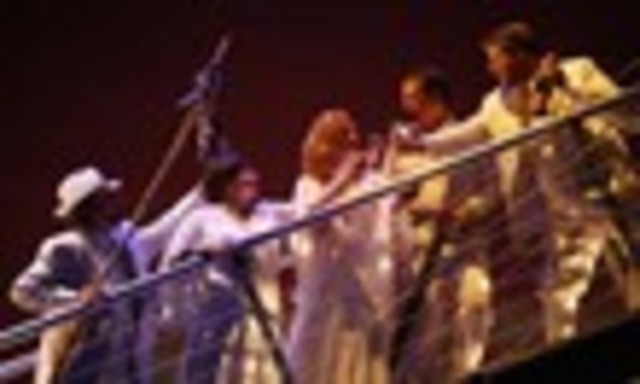
In Zambello’s new reading, the gods represent the American wealthy class, a family of corrupt business barons building the American dream, a vast mansion that will be their new home. When we first see the gods in the second scene, Wotan is asleep on a lounge chair on the veranda of what looks like a southern plantation. All the gods are dressed in Tom Wolfe-style white suits or dresses. The only things missing are croquet mallets — instead of a hammer, Donner wields a T-square, presumably to help with the design of the architectural plans of Valhalla.