 Arguments over where to put new monuments on the National Mall have grown increasingly frequent and divisive as the front lawn has filled up. In 2003, Congress banned new construction on the Mall’s cross-axis, beyond what had already been approved. In 2004, the National Museum of the American Indian and the World War II Memorial opened, and recently, a trapezoidal spot just northeast of the Washington Monument was chosen as the location for the National Museum of African-American History and Culture. The increasing clutter has led to discussions on expanding the Mall’s area, or at least increasing the utilization of Mall spots that go underused.
Later this month, D.C. Delegate Eleanor Holmes Norton plans to introduce legislation that would expand the Mall around the confluence of the Potomac and Anacostia Rivers and up to RFK, according to an article in today’s District Extra. The piece also notes that the National Capital Planning Commission is seeking to improve and monumentify other federal land around the downtown area:
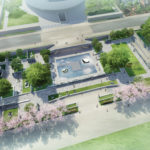
To ease pressure on the Mall, the National Capital Planning Commission is kicking off a series of public meetings in the next few weeks to formulate a plan on how to beautify other federal lands to become Mall-like homes to future monuments and museums. Doing so also would draw tourists to other parts of the city.
In addition to the RFK site and Poplar Point, they include the Northwest Rectangle, Federal Triangle, Southwest Federal Center, South Capitol Street, East Potomac Park and the Banneker Overlook, at the foot of L’Enfant Plaza.
Ah, yes, the Northwest Rectangle. Still, much of the attraction of some of these locations is their availability for recreational activities (East Potomac Park) or commercial use (South Capitol Street). And while an important part of Washington’s city fabric is the Mall, serving as the national center for remembrance and repository of historical knowledge and artifacts, this is a working city, and its status as home and place of business for the cogs of government is vital. Congress should be careful not to harm the working city in creating the memorial city.
But what do our readers think? Should the Mall continue to occupy only its current space and grow more crowded, should it expand to include more of the city, or should the District Mall declare itself closed, leaving other monuments for our neighbors?
Picture taken by andertho.