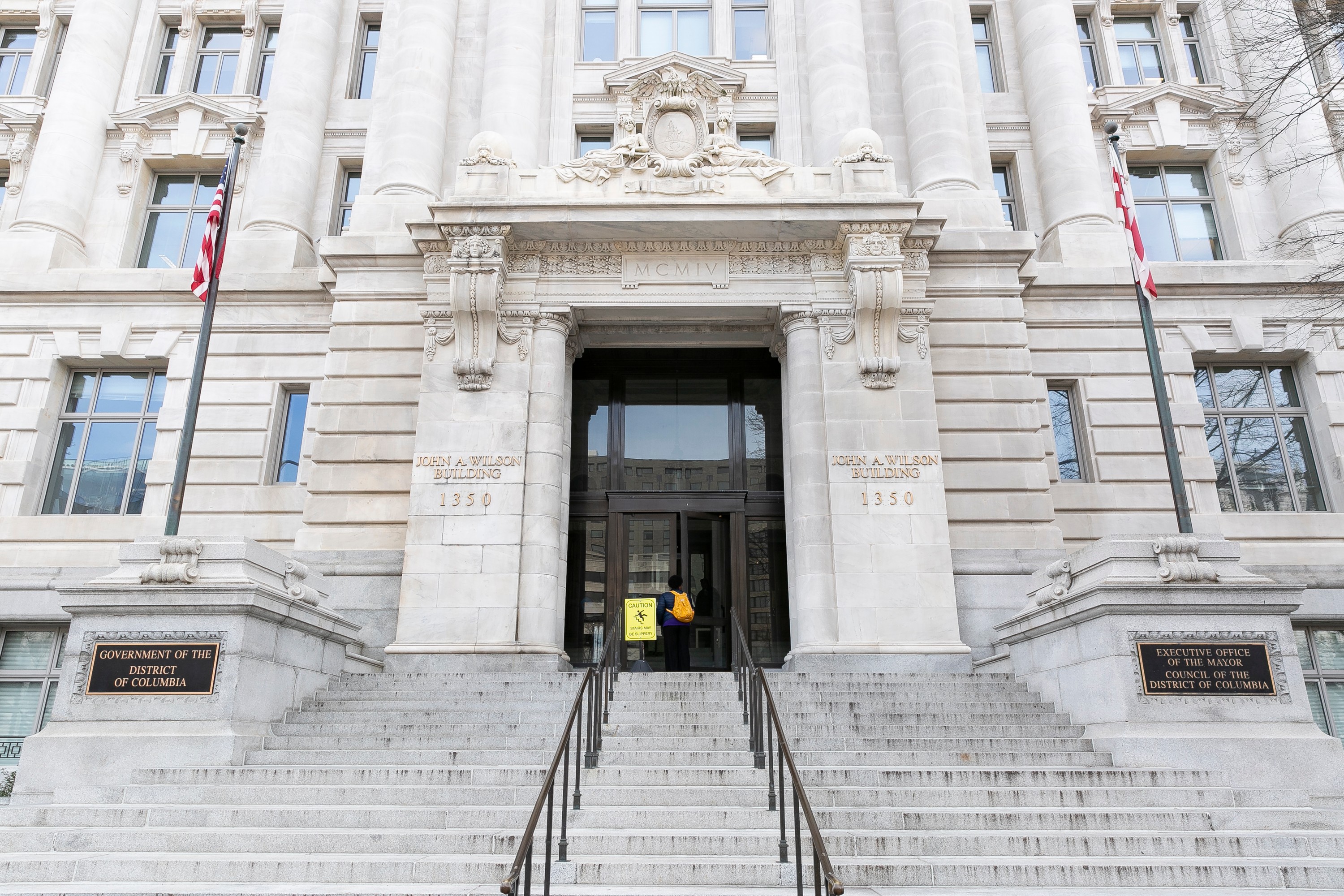
Although it might feel like the 180th day of March, fall is around the corner and the D.C. Council is back from its summer recess. With an ongoing pandemic, daily protests against police brutality and racial injustice, and an economic crisis, the 13-member legislative body is returning to the Wilson Building (or their Zoom screens) with no shortage of issues to tackle. This fall is especially important, as it marks the end of the council’s two-year legislative period. This means that anything that is not passed will be scratched, and will need to be re-introduced in the next session — when the council will have at least two new members (stay tuned for our voter guides) and the committees will look different. Here are some — but by no means all — of the issues we’ll be watching over the next few months.
Potential Budget Shortfalls
The council gave final approval to the city’s 2021 budget in late July, but the ongoing economic disruptions caused by the pandemic may force them to give it another hard look early in the fall. While the pandemic forced lawmakers to trim almost $800 million from the $9 billion budget, D.C. CFO Jeffrey DeWitt warned in August that there may be more revenue losses to come — up to $500 million in a worst-case scenario. If that comes to pass, the council could consider cutting more programs and services, or finding new revenue through things like tax increases. A proposal for a modest increase on high-income residents failed to move forward over the summer, but it may well gain traction if the pandemic again hammers the city’s budget. We’ll be looking at how these shortfalls impact the rest of the council’s priorities this session, as well.— Martin Austermuhle
Police Reform Commission
Police reform is without question one of the hottest topics of the year, but some of the deepest conversations about it won’t even be happening at the D.C. Council this fall. Rather, a 20-person Police Reform Commission that lawmakers created over the summer will be leading the discussions. (Arlington County has a similar commission in place.) The commission has been tasked with looking at the role of police and security guards in schools, alternatives to police for responding to non-violent incidents, police discipline, and how conflict resolution and restorative justice strategies can be worked into policing. The group is also requesting additional information from D.C. police about the fatal police shooting of Deon Kay last week. The commission is expected to offer recommendations by the end of the year. The biggest question remains whether the council will ultimately act on any of them. — Martin Austermuhle
Police Reform Bills
Earlier this summer, the council passed sweeping police reform legislation that bans the use of chokeholds, mandates the release of body-camera footage after fatal incidents, addresses police discipline, and prohibits the Metropolitan Police Department from buying surplus military equipment. But because the bill was passed as an emergency measure, it’s time-limited — and needs the council to pass a permanent version of the legislation. While that’s expected to happen, there are likely to be tweaks made, primarily to provisions banning the use of tear gas and rubber bullets to disperse peaceful protesters (it remains unclear if police violated this measure over the summer) and another that lays out the process for advising families of victims killed by police that body-camera footage will be made public. — Martin Austermuhle
Rent Control
Roughly half of D.C.’s apartment units fall under rent control, which limits how much rent can increase every year. But tenant advocates have long said that D.C.’s rent control law has too many holes to fully protect renters from steep rent hikes. This fall, the D.C. Council is expected to take up the matter, but it’s not clear how far any reforms will go; the property management industry has been very effective at keeping the law the way it is.
But Councilmembers Brianne Nadeau and Trayon White are trying to change that. After the council voted to keep the law as-is for another 10 years — winning praise from landlords — the representatives from wards 1 and 8 introduced legislation over the summer that gives tenant advocates most of the amendments they’ve been seeking. The Nadeau/White bill would, among other things, bring many more units under rent control and eliminate various exemptions that landlords have used to get around the rules. Their proposals could help keep thousands of D.C. renters in their homes, supporters say. Opponents contend that the city should fund more affordable housing instead of forcing more landlords to limit rent increases.
Nadeau and White’s legislation was assigned to the Council’s housing committee, but no hearing has been scheduled yet. As of now, Committee Chair Anita Bonds (D-At Large) is choosing to focus on piecemeal bills that tackle rent stabilization reforms one by one, rather than a comprehensive bill. A virtual Sept. 24 hearing on those proposals is sure to be well-attended by tenant advocates and landlord representatives alike. (And if you want to get really into the weeds, watch the Sept. 14 public roundtable on “Certificates of Assurance” in rent control. Discussion will focus on a lesser-known piece of the 1985 rent control law that advocates call a “poison pill,” because it makes D.C. grant enormous tax breaks to property owners if rent control is ever expanded. Bring popcorn!) —Ally Schweitzer
Unemployment Insurance
Since the onset of the pandemic, many of those who work in the District have been unable to access some or all of the unemployment insurance benefits for which they’re eligible. In the past nearly six months, more than 141,000 claims have been filed in the District, compared to roughly 6,426 filed in the last three months of 2019. The city’s system, run by the D.C. Department of Employment Services, has been plagued by technical barriers derived from a dated infrastructure, one that remains inefficient after some $9 million of investments.
In March, the D.C. Council passed emergency legislation that, among other things, expanded access to UI for “affected employees.” The federal CARES Act expanded access further, including to independent contractors and gig workers, and added another $600 to weekly benefits (which, without CARES funding, are capped at $444 in the District) through July 31. On Sept. 9, Mayor Muriel Bowser announced that D.C. would be participating in the federal government’s Lost Wages Assistance program, which provides an additional $300 per week in unemployment benefits.
On Sept. 16, the Committee on Labor and Workforce Development, chaired by At-Large Councilmember Elissa Silverman, will hold a public oversight hearing on the city’s unemployment compensation program. Members of the public can testify virtually or via written statement. The committee will also revisit the Unemployment Compensation Employer Classification Amendment Act of 2019, which is currently under review. If passed, the act would expand the technical definitions of employment (in line with the Federal Unemployment Tax Act) and permit government entities to make payments into the city’s unemployment fund. — Eliza Berkon
Transportation Bills
The Vision Zero Omnibus bill got its first approval from the council in July, so it should be up for a final vote in the coming months. The legislation tackles the District’s traffic safety problems with a mix of new or modified infrastructure, driver education, and stricter traffic laws. Some of those fixes are free, and others cost money — $171 million over four years, according to the D.C. budget office. In July, the council agreed that the cheap or free parts of the bill could be enacted first. But before that happens, it’ll need approval from Bowser and Congress.
Another big transportation bill, Metro For D.C., which would subsidize Metro fares for D.C. residents up to $100 per month, could come up for a hearing this session. It’s not yet clear how the pandemic’s impact on Metro — and the D.C. budget — might complicate its reception. — Margaret Barthel
Sanctuary Legislation
Temporary legislation that limited the D.C. Department of Correction’s relationship with Immigration and Customs Enforcement is slated to expire this October. The bill, introduced by Ward 6 Councilmember and Public Safety and Judiciary Committee Chair Charles Allen, was first passed as emergency legislation last October. It prohibits the D.C. DOC from holding immigrants in custody for ICE, sharing immigrants’ location, release dates, or criminal information with ICE, and bars local officials at city-owned detention facilities from allowing ICE access for the purposes of detaining someone.
The temporary version of the bill (active for 225 days) ends Oct. 9, and a public hearing about implementing permanent legislation is scheduled for Oct. 1. Despite ICE’s policy changes during the pandemic (like limiting mandatory detentions based on public-safety risks and criminal grounds), and D.C.’s $5 million COVID-19 relief fund for undocumented workers, a Sept. 2020 Washington City Paper report revealed that MPD has continued to cooperate with ICE, despite the D.C.’s sanctuary policies. — Colleen Grablick
Distance Learning Oversight
While the mayor’s office maintains direct control of D.C. public and charter schools, the council holds the power of performance and budget oversight. On Oct. 2, the Committee of the Whole and the Committee on Education will have a joint public hearing to discuss the roll out of distance learning. Remote learning is expected to continue for the majority of students until at least Nov. 6, although Bowser suggested this week that small groups of DCPS students should return to classrooms by the end of September. According to the council notice, the joint hearing will focus on digital access, quality of learning, attendance, and engagement — issues that plagued the city’s transition to virtual learning in the spring. The Committee on Education will also hold its annual youth roundtables this fall (likely in October and November), where students will have an opportunity testify about their remote learning experiences. — Colleen Grablick
Changes In Charter Schools
My School D.C. is the lottery system families in the District use to rank schools they want their children to attend. The lottery is random but schools can give priority to a student for several reasons, including having a sibling who already attends the school. The city could add another preference for students applying to charter schools. A proposal by D.C. Council Chairman Phil Mendelson and Councilmember David Grosso would allow charter schools to prioritize students considered at-risk, which means they come from low-income families. School leaders at multiple high-performing charter schools supported the proposal during a public hearing in July, arguing an at-risk preference would help diversify campuses — or keep them diverse — as the city gentrifies. Charter schools, which educate about half of D.C.’s public school students, are publicly funded but independently run.
Charter schools in D.C. have long campaigned for more building space in the city. In January, Bowser announced that KIPP D.C., the largest charter school operator in the city, would build a new campus at the former location of the Ferebee-Hope School in Ward 8. Now, the council must approve the agreement. In July, Mendelson introduced a bill that would do that, but it’s still in the early stages of the legislative process. — Debbie Truong
African American Studies Courses
Ten members of the D.C. Council introduced a proposal in February that would require public schools, traditional and charter, to offer an African American history course by August 2022, and the course would be mandatory for high school graduation. A public hearing on the bill was held in July. Meanwhile, the D.C. State Board of Education, which advises the State Superintendent of Education, is also in the process of revising the city’s social studies standards. The update will ensure the city’s social studies curriculum is culturally responsive and anti-racist, according to the board’s website. —Debbie Truong