In January, three young women will begin serving full terms as District lawmakers, shifting the composition of the D.C. Council to majority-female for the first time since 1998.
The three women — Janeese Lewis George, Christina Henderson, and Brooke Pinto — will be the newest Ward 4, at-large, and Ward 2 councilmembers, respectively. All three are millennials, former D.C. government staffers, and first-time elected officials who scored impressive victories this year by achieving significantly more votes than their opponents.
The trio are set to launch their terms in the middle of the coronavirus pandemic, which has made the job of governing — from legislating to crafting agency budgets — even trickier than normal. They have some biographical similarities, but diverge on ideology, style, and identity. With their tenures, the council is expected to shift leftward, especially on certain issues.
For example, George, Henderson, and Pinto all say they support expanding rent control. But they appear to disagree on tax policy: George and Henderson say they favor raising taxes on high-income earners, while Pinto voted against such a measure in July.
That measure failed 8-5, even though government coffers were strained by the COVID-19 recession. The councilmembers whom George and Henderson are replacing voted against the tax hike, meaning that one could pass in the future.
The elections of George and Henderson will also make the 13-member council majority-Black for the first time since 2012, the year after D.C., once known as “Chocolate City,” lost its Black majority. (Today, the city is estimated to have equal shares of Black and white residents, at 46% each.) The legislature will now have seven female members and seven Black members.
Of the three new councilmembers, only George is a native Washingtonian. Pinto was born in Connecticut and Henderson in New York.
Their campaign fundraising differed as well. Pinto raised money under the District’s traditional fundraising rules, whereas George and Henderson both participated in its new public financing program. George was the first-ever candidate to max out the contribution match in the program, receiving donations from about 1,200 D.C. residents by mid-March.
She and Henderson both belong to the same sorority as Vice President-elect Kamala Harris, the Alpha Kappa Alpha Sorority. Now headquartered in Chicago, it was originally founded in D.C. — at Howard University in 1908 — as the first Greek-letter sorority for Black women.
George and Pinto have similar resumes: They used to work as lawyers in the office of D.C. Attorney General Karl Racine, who endorsed them both in their Democratic primary races. Henderson was the deputy chief of staff for At-Large Councilmember David Grosso, whose education committee she directed and whom she will succeed. In a crowded field, she ran as an independent for the seat he is vacating.
Pinto is already serving as the Ward 2 representative, having won the special election to replace former longtime Councilmember Jack Evans in June. (Evans resigned in January amid an ethics scandal that nearly resulted in his expulsion from the legislature, although he quickly went on to run for his old seat in the primary; he lost.) She clinched a four-year term in the general election.
DCist recently spoke with all three new councilmembers about their priorities, plans, and electoral wins. Get to know them better by reading below.
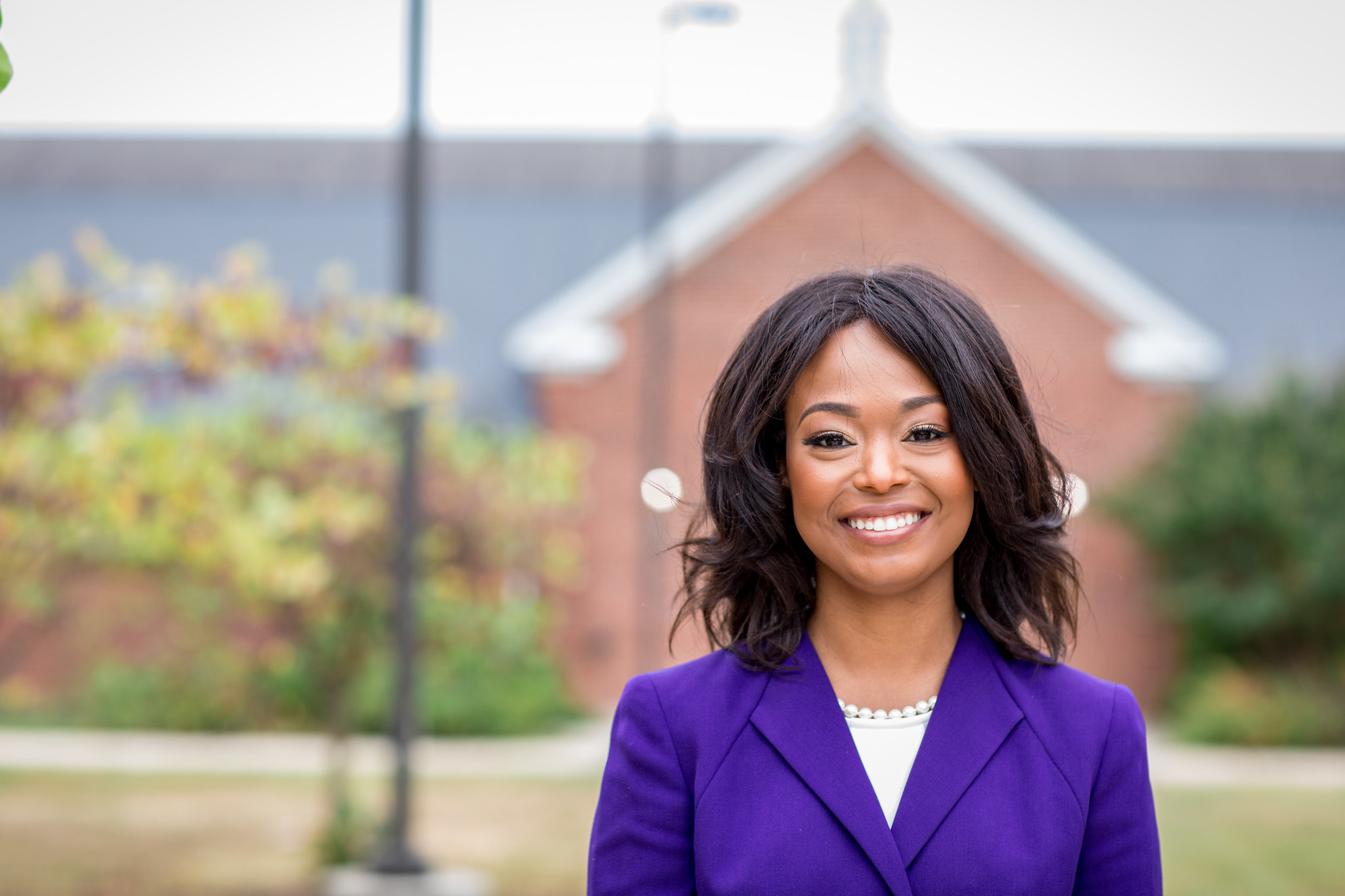
Janeese Lewis George (Democrat, Ward 4)
Janeese Lewis George, 32, shocked the city’s Democratic establishment when she beat five-year incumbent Brandon Todd in the primary. The protégé of Mayor Muriel Bowser, Todd racked up more than $490,000 in campaign contributions, a huge sum for a council race. He was endorsed by Bowser as well as three sitting councilmembers, including Chairman Phil Mendelson.
George launched her campaign in August 2019, 10 months before the primary, and quickly attracted support from some of the most vocal left-leaning organizations and unions in the city. She campaigned on reducing gun violence, improving public schools, and increasing the city’s stock of affordable housing, and says she had already knocked on 33,000 doors by the time the COVID-19 pandemic hit D.C.
“I would tell everybody who’s thinking about running in 2022 to start early,” she notes. “That was one of the advantages I had.” In addition, George benefited from endorsements from At-Large Councilmember Elissa Silverman and D.C. Attorney General Karl Racine, her old boss. (As an assistant attorney general, George prosecuted juvenile cases and took interest in reform.)
A third Democratic candidate, labor lawyer Renée Bowser (no relation to the mayor), dropped out of the race in March, and a fourth, community activist Marlena Edwards, failed to drum up support. In the meantime, George honed her digital strategy and worked the phones, contacting voters directly. Her campaign also printed literature in Spanish and Amharic.
There were some hitches along the way, though. In April, the D.C. Department of Public Works removed roughly 250 campaign signs for George from street poles in Ward 4, damaging dozens. The agency ultimately apologized for what it called an “honest mistake” by new employees and restored the signs that were salvageable. (At first, DPW said only two signs were taken down.)
Then, in a move that surprised many, a key progressive activist threw his influence behind Todd: Rev. Graylan Hagler, the senior pastor of the Plymouth United Church of Christ, who advocated for paid leave and other worker-friendly policies. Like George, he championed Initiative 77, the 2018 ballot measure on the tipped minimum wage that voters approved but the council repealed.
These setbacks ended up not mattering much. In the June 2 primary election, George prevailed over Todd 55% to 43%, by more than 2,300 votes. She says she was motivated to stay focused on winning, despite the campaigning challenges created by the pandemic, because she recalled council actions that outraged her: the overturning of Initiative 77, the curtailing of tenant rights.
“You have to know your ‘why,’” says George, who identifies as a democratic socialist. “Because during the campaign, there’s going to be so many days you want to quit.” Her campaign raised more than $340,000 for the primary, thanks in large part to public financing, city records show.
Since then, George has been conducting listening tours with community members, from civic associations to advisory neighborhood commissions. A major theme of those interactions, she says, is a desire for more unity between older and newer residents in her ward, which is being gentrified like other areas of D.C. Another theme? Frustration with the city over traffic projects.
George is currently interviewing candidates for her council staff. She says she intends to explore what a “Green New Deal” would look like at the local level — a civilian conservation corps that retrofits public housing with sustainable infrastructure, perhaps, or a congestion tax. She aims to push forward vocational programs that would help young people get union jobs as well.
George adds that, as a “Day One” priority, she wants to sponsor emergency legislation on public safety issues in her ward. “Just like we have Vision Zero for traffic fatalities, we have to have a Vision Zero for gun fatalities,” she says, evoking the city’s initiative for preventing road deaths. (George says she has already talked with judiciary committee chair Charles Allen on this topic.)
Asked about the demographic changes slated for the council, the councilmember-elect says she hopes the new female majority will lead the legislature to be more effective. But she says what will impact the council most is the “diversity of lived experiences” among its members.
“When it comes to how we address certain issues, we’re all able to bring our stories and tell our stories,” George says, pointing to her experiences of working at a restaurant and in retail, being the daughter of a U.S. Postal Service employee, and facing displacement while growing up. She says the capacity to put policy in human terms is the true value of having diverse representation.
“A lot of people just feel like leaders in our city don’t hear them and don’t see them,” George explains. “And so, as much time as we spend in the Wilson Building, I hope we’ll also balance spending that much time in the community. Because there’s nothing like meeting the community where they are.”
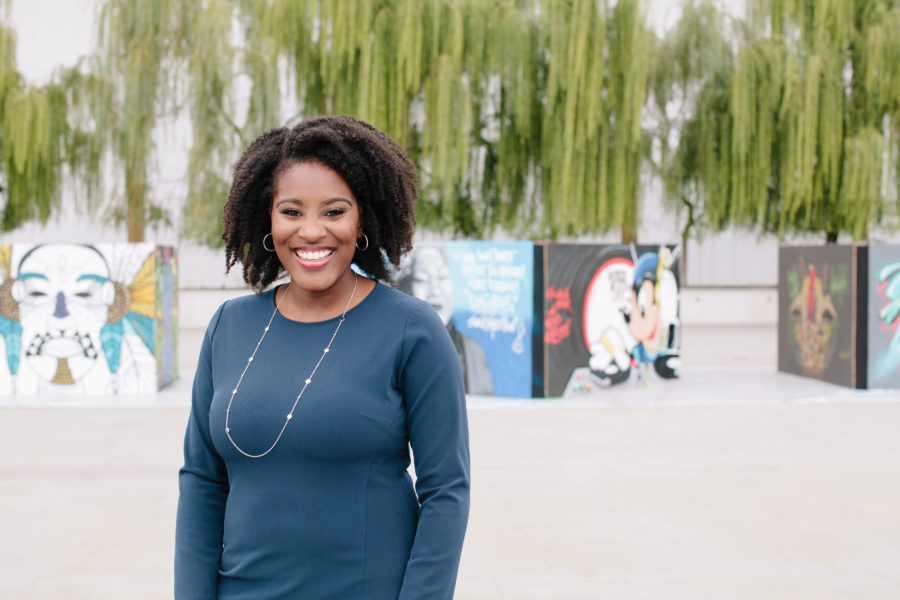
Christina Henderson (Independent, at-large)
After incumbent David Grosso announced he wouldn’t seek reelection last year, approximately two dozen people declared their candidacies to fill the at-large seat he has held since 2013. The race became the most closely watched contest on the November ballot, featuring a bevy of new and familiar politicos.
Thirty-four-year-old Christina Henderson was one of the new ones, although as a former staffer for Grosso she was well versed in the D.C. Council. A current legislative assistant for U.S. Sen. Minority Leader Chuck Schumer (D-NY), she also had experience on Capitol Hill.
Henderson received endorsements from Grosso and the Washington Post editorial board, which helped boost her name recognition in the jam-packed, citywide race. She described herself as a “pragmatic progressive,” and campaigned on investing in early childhood education, affordable housing, and climate resilience. Some of the other candidates voiced similar positions and also had D.C. government experience.
On election night, the preliminary vote counts showed her ahead of her opponents, including former At-Large Councilmember Vincent Orange and second-time candidates Ed Lazere and Marcus Goodwin. Henderson claimed victory the next day as her lead grew with mail ballots.
The D.C. Board of Elections reports she won just under 15% of the vote, or about 75,000 votes. (Democratic incumbent Robert White glided to reelection with nearly 26% of the vote in the at-large race, which entailed two open seats; due to a quirk in D.C. law, Grosso’s seat was eligible only for non-Democrats.) Orange, her next-closest opponent, won just over 12% of the vote.
Henderson says her campaign sent out more than 500,000 pieces of mail and she participated in almost 100 virtual events, like meet-and-greets and forums. Her team also dropped off literature at more than 21,000 doors and issued more than 48,000 text messages. The campaign brought in more than $360,000 in mostly public funds as of late October, according to city records.
“Especially with COVID, we kind of knew that the traditional way of campaigning wasn’t going to work here,” says Henderson, a Petworth resident and mother of a 19-month old daughter. “We had conversations with people that we met outside, but we wanted to respect the fact that we are in a global pandemic right now.”
Once she joins the council, Henderson says she will introduce legislation to implement ranked-choice voting in District elections because she feels the current setup doesn’t work. Under such a system, voters typically rank their preferences, so that if no candidate secures a majority of the votes, a runoff ensues. Proponents contend ranked-choice voting can improve representation and civic discourse, particularly in crowded races like the at-large race.
In addition, Henderson wants to reform council procedure with an independent parliamentarian to administer the rules of debate, a role that’s currently filled by the chairman (sometimes to the chagrin of other members). She supports tweaking how committees are formed to better ensure institutional knowledge on specific issues, noting that assignments now change every two years.
Born in Brooklyn, Henderson moved around the country as a child because her mother served in the military. Her father worked as a bus driver in New York City for 29 years. She first moved to D.C. in 2008, working for then-U.S. Sen. Hillary Clinton’s (D-NY) presidential campaign.
“I believe that representation matters,” Henderson says in response to a reporter’s question about the prospects for the council’s new Black and female majorities. “In terms of how women lead, I know the tenor of debate is usually different, very much more collaborative.” One issue she may find herself debating in the coming months is rent control, which she says she favors expanding.
Laughing, Henderson points out that she and the two other councilmembers who will commence full terms next year — Janeese Lewis George and Brooke Pinto — are all under 35. “I think that adds an interesting perspective to the council going forward,” she notes, “to have a younger crop of leadership.”
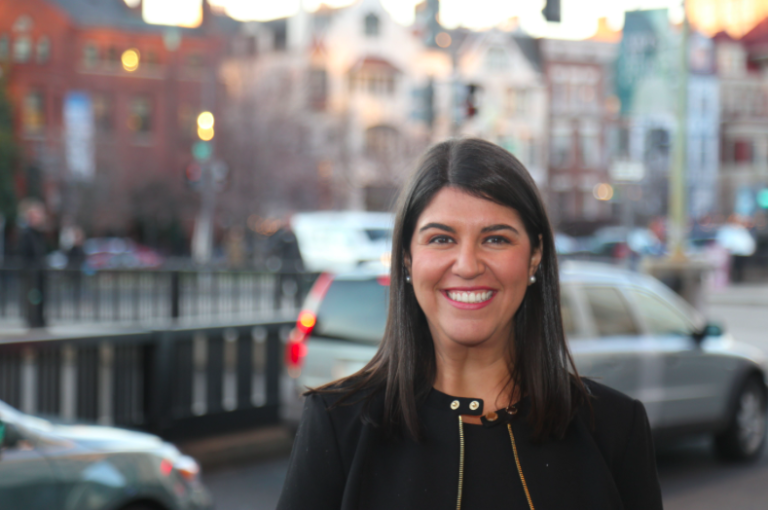
Brooke Pinto (Democrat, Ward 2)
At 28, Brooke Pinto became the youngest-ever D.C. councilmember after overcoming several opponents in the special election to serve out the rest of erstwhile Councilmember Jack Evans’ term. She emerged with more than 42% of the vote, having won the Democratic primary just a couple of weeks earlier with more than 28% of the vote.
Pinto’s primary victory stunned many observers of D.C. politics. She launched her bid in mid-February as the eighth candidate in that race, which saw an unsuccessful comeback campaign by Evans himself. Prior to her entry, she worked on legislation and served as a tax attorney in D.C. Attorney General Karl Racine’s office. Both he and the Washington Post endorsed her.
Presenting herself as a “fresh face,” Pinto raised more than $190,000 in campaign donations for the primary and special elections. This sum included $45,000 in loans that she made to her own campaign. A native of Greenwich, Connecticut, Pinto was the only Ward 2 candidate who didn’t use the city’s public financing program, saying she joined the race too late to do so effectively.
She told the DC Line she made more than 30,000 calls to voters, in part due to the COVID-19 stay-at-home order that the mayor imposed in the spring. “Basically all I knew of campaigning was doing it remotely,” Pinto explains. “That really afforded me an opportunity to hear directly from people about their concerns, their ideas, their interests.”
Besides Evans, she was up against three advisory neighborhood commissioners and three other first-time candidates. Pinto was one of two women in the field. She garnered 3,142 votes in the primary, ahead of Patrick Kennedy’s 2,763 votes and Jordan Grossman’s 2,385 votes. (The two of them dropped out of the June 16 special election, but their names still appeared on the ballot.)
Pinto’s campaign faced scrutiny over its finances, including an official complaint filed by Ward 8-based attorney Lauren Wolfe. She alleged the campaign failed to disclose its use of a recently purchased home in Logan Circle as an expenditure. Pinto said her campaign ended up not using the home as a headquarters due to the coronavirus pandemic; the complaint was later dismissed.
In late June, Pinto was sworn in as the newest member of the council. Almost immediately, she was thrown into debates over the District’s budget, which was being weakened by the pandemic. She cast a crucial vote against a contentious proposal by Ward 6 Councilmember Charles Allen to raise the marginal tax rate for residents who earn more than $250,000 annually. (It failed 8-5.)
“I voted against that bill for many reasons, but one of them is that I believe taxes and the budget should be considered through the whole process,” says Pinto, adding that the proposal sought to increase revenue without receiving a public hearing. The council did, however, raise the gas tax and reduce tax breaks for certain tech companies, among other budgetary changes. Pinto voted for both.
Since the summer, she’s been busy with committee work and constituent service requests, which have ranged from parking enforcement and trash pickup to unemployment benefits and permitting. (In one instance, a group of neighbors asked for a port-o-potty to be moved away from a playground.) She says these allow her to draw on her background in hospitality studies.
As of a week before the general election, Pinto had raised more than $200,000 total in campaign money. She bested two independent challengers, Advisory Neighborhood Commissioner Randy Downs and former nonprofit worker Martín Miguel Fernandez, with more than 68% of the vote. Recently, she’s also introduced legislation to expand public restroom access and outdoor dining.
But just this week, she caused controversy by tweeting about last Saturday’s pro-Trump rally in downtown D.C., which is part of her ward. While she spoke out against the fact that the protests saw violence, including at least one stabbing, Pinto failed to condemn white supremacy and far-right groups like the Proud Boys. Instead, she wrote “Ward 2 welcomes all” peaceful protesters.
She apologized for her comments on Monday, saying in a video that she meant “to provide the public with information around arrests that had been made as well as confirm and clarify that it is never acceptable to use violence in our city.” She also condemned white nationalism and said she stands with Black Lives Matter and the Jewish and LGBTQ communities.
Looking ahead, Pinto tells DCist she plans to focus on small businesses, criminal justice reform, and affordable housing. She says she’s excited about the council’s imminent female majority and welcoming Councilmembers-elect Janeese Lewis George and Christina Henderson on board.
“I’m hopeful that seeing so many women on the council will inspire other women to get involved and realize you absolutely can do it,” she says. “A diversity of perspectives and experiences is what makes our local government so strong.”
Colleen Grablick contributed reporting.