Martin Austermuhle
 It isn’t easy being the District.
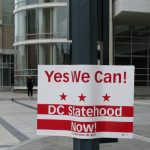
While we District residents pride ourselves on living in a city that is diverse and dynamic, the rest of the country tends to lump us together with the federal government that shares our geographic space. Call it guilt by association — Congress wastes money and the president lies, and suddenly everyone who lives within the city limits has something to do with federal excesses and excuses. This couldn’t be more ironic, given that though we live near and next door to the federal government, we still don’t have any representation within it.
A feature in the Post yesterday highlighted this identity crisis of sorts. In a feature in the Outlook section titled, “What ‘Washington, D.C.’ Means to Them,” the Post asked columnists from around the country to share their impressions on our city. As is to be expected, most offered opinions on Washington, leaving the District out of the picture all together. Some highlights:
Steve Duin, Oregon: Let’s begin with the obvious: the wince, the weary shake of the head, the sigh of cynicism. Washington? That Washington?
Betty Winston Baye, Kentucky: Still, I’ll risk saying that if the average Kentuckian were asked what he or she thinks of Washington, the response would be: “Wouldn’t mind seeing the White House and all the monuments, but I wouldn’t want to live there. Why? Corrupt politicians. Crime. Bad schools. Racial tension. Immigration-related tension. Terrible traffic. Mayor Whatshisname, the one who was using drugs.”
Jill Callison, South Dakota: Though South Dakota is halfway across the United States — flyover country to you — we’d like to be a little farther away from Washington. Because nothing good comes from that piece of former swampland wedged between Virginia and Maryland.
Ed Shamy, Vermont: What are all those people doing in the District of Columbia? They crowd into underground trains, they sprint for cabs, they sit for hours around polished tables yakking at each other, and then they go home. Nothing to touch, nothing to taste. Nothing except paper from the trees we cut in Vermont to shove into briefcases everyone seems to hug so passionately.
It goes without saying — we don’t see ourselves as cheerleaders for official Washington ourselves. We don’t much like all the pomp and circumstance; we’re not terribly pleased with constantly being under one security alert or another; we definitely don’t like all the motorcades; and we could do without having to submit all of our local legislation to a congressional committee that pretends to know what is best for us. But we were also quick to learn that the District isn’t all Washington, that our local problems are hardly any different than those in most other major urban areas, and that the locals rarely pride themselves on living next to the seat of federal power. The only columnist that seemed to recognize this was Steve Edwards, an Alaskan, who wisely observed:
You can’t define a place by what you think you know or what you’ve heard. If that were the case, most Alaskans would live in igloos — in reality, very, very few do.
So, what is Washington? I’m not sure. I can’t make a judgment based on one visit. But what I recall is a vibrant city with plenty of history. And a place that cherishes its springtime cherry blossoms. From the Alaskan perspective that spring can’t get here soon enough, D.C. looks like the best place in the world.
We like to think so. As for the rest of the columnists, consider this — next time you come to Washington, let us know. We’ll show you the District, and maybe then your opinion will change.
Picture snapped by Ronnie R